
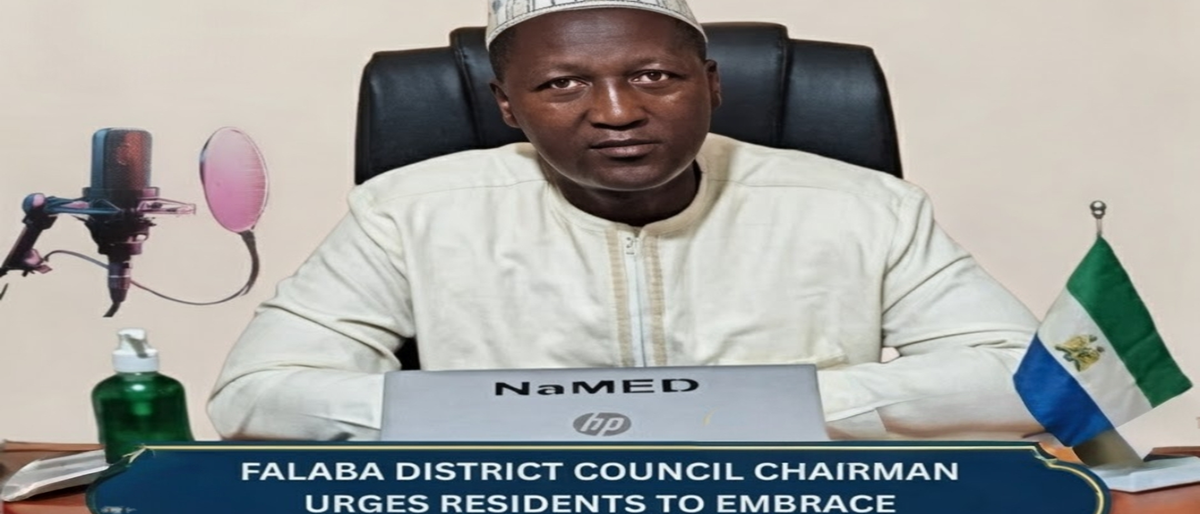
The Chairman of the Falaba District Council, Ibrahim Sorie Sesay, has called on residents, stakeholders, and development partners to warmly embrace and safeguard all forms of support and development initiatives in the district.
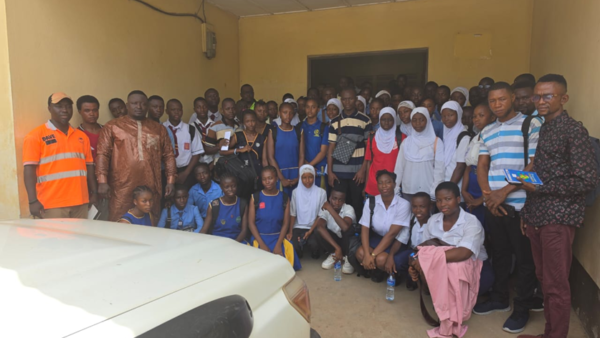
He made this appeal on March 23, 2026, during the National Civic Day Series District Outreach Initiative held in Mongo Bendugu, the district headquarters town.
In his address, Chairman Sesay acknowledged the numerous challenges facing the district, particularly the poor road network, which he described as a critical issue requiring urgent intervention. However, he emphasized that road development alone is not sufficient to improve livelihoods as there are other areas like health, agriculture, education etc.
“Yes, it is very obvious that we need a good road network, but roads alone cannot put food on the table. We need much more,” he stated, urging residents to collaborate with the central government and development partners to achieve holistic development.
The Council Chairman highlighted Falaba’s rich cultural heritage and abundant natural resources, noting that these assets have the potential to significantly contribute to economic growth both within the district and nationally.
He also drew attention to the pressing challenges in the health sector, revealing that the district lacks adequate Peripheral Health Units (PHUs) and other essential healthcare facilities. According to him, this situation continues to hinder access to quality healthcare services, especially for residents in remote communities.
Chairman Sesay further called on development partners to strengthen collaboration with the government to accelerate development across the district. He expressed appreciation to partners for their continued support over the years.
Describing Falaba as a “resilient district,” he noted that its people are always willing to embrace development initiatives. He also highlighted the district’s diversity, explaining that out of the thirteen chiefdoms, five are predominantly Yalunka while eight are largely Kuranko, with other tribes from across Sierra Leone coexisting peacefully.
He concluded by noting that agriculture remains a key livelihood for the people of Falaba, with many actively engaged in food production in support of the government’s “Feed Salone” initiative aimed at boosting national food security.